The problem
The homeowner had a roof leak that kept coming back. Nothing on the roof looked obviously wrong from the ground, and a guess at the cause risked paying for repairs in the wrong place.
How we found it
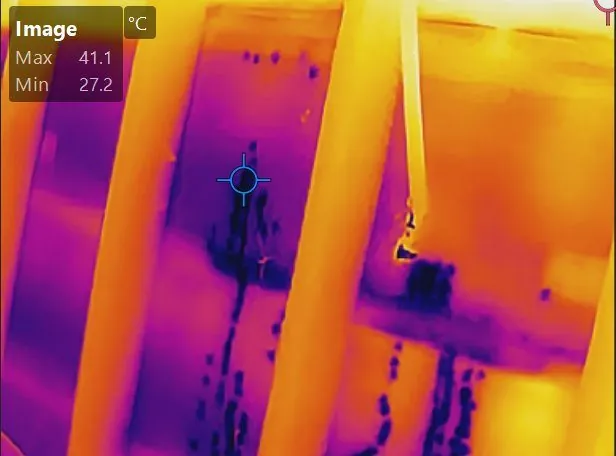
A leak only shows on thermal imaging while water is moving, so we created the conditions for it. The roof had been dry for around seven days. It was drenched twice, at 12:00 and 13:45, and the thermal survey of the loft started at 14:00.
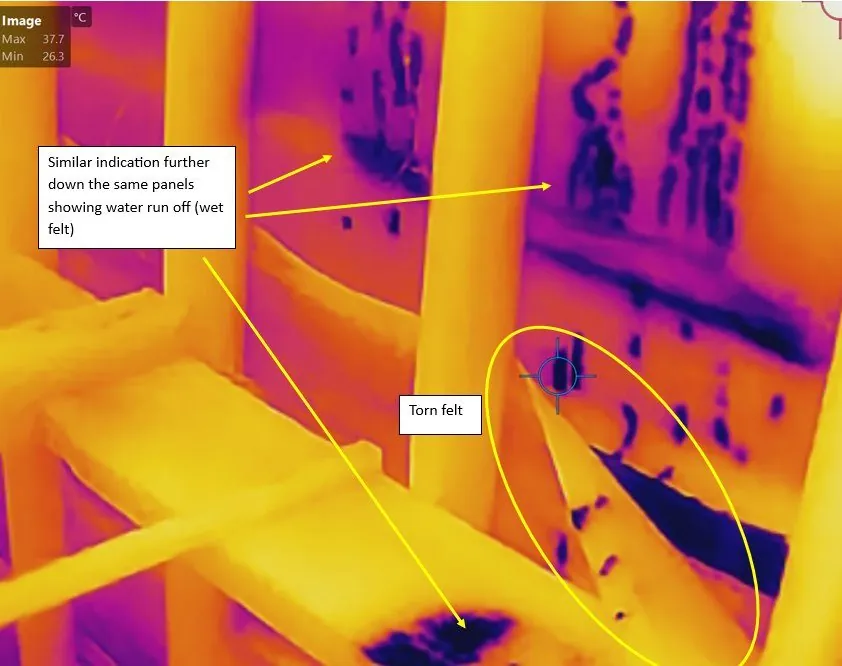
Wet felt and timber read cooler than the dry timber around them. In the loft, two cold signatures showed up, at around 27 to 30°C against roof timbers of up to 41°C. Both sat directly under the solar panel array.
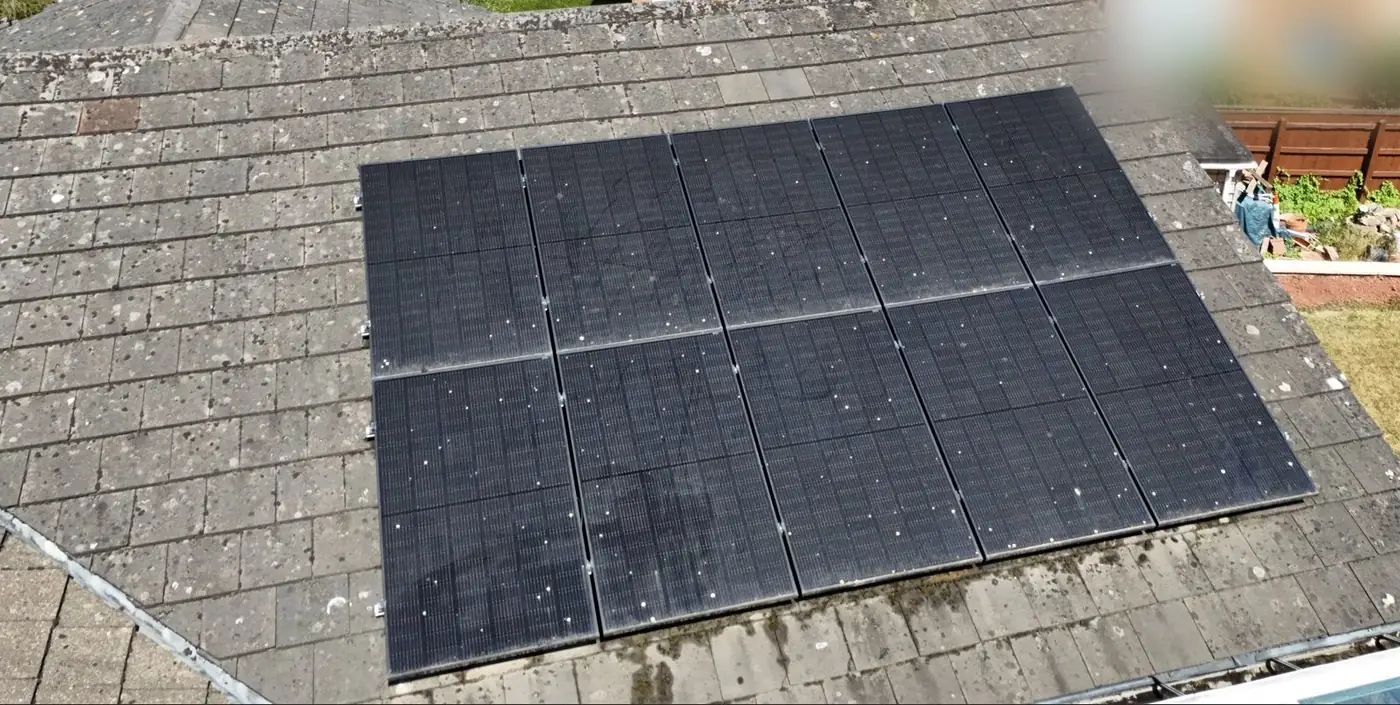
We then flew the drone to inspect the outside of the roof: the panel mountings, the cable entry point and the condition of the tiles.
What we found
- Area 1: Water tracking down the felt from the solar panel cable entry and mounting point. This was the primary entry point.
- Area 2: A second leak further along the same panel row, where the roof felt was torn and no longer acting as a backup barrier.
- Separate tile defects: The drone survey also found broken, loose and mismatched tiles elsewhere. Because they were away from both thermal signatures, they were assessed as general maintenance, not the cause of the leak.
The outcome
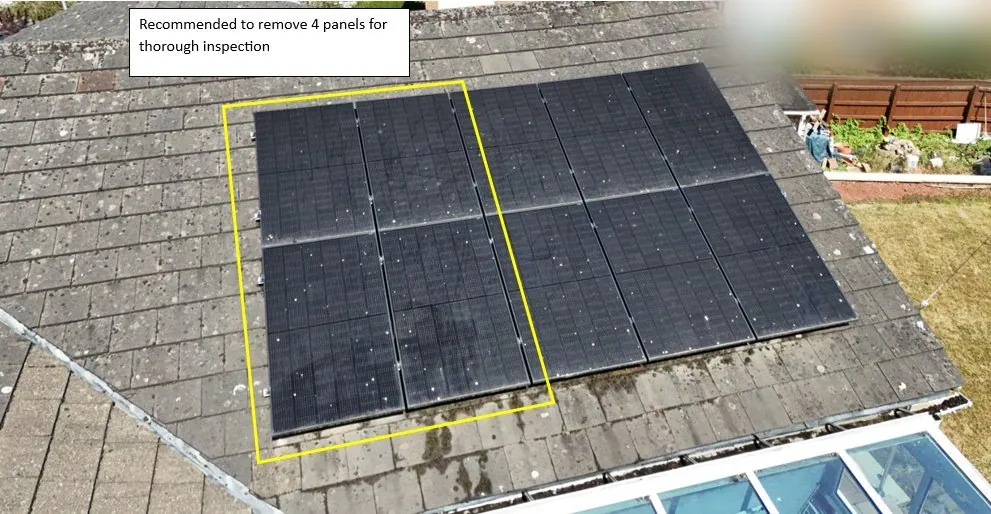
Instead of a speculative re-roof or tile repairs that would not have fixed the problem, the homeowner got a clear plan:
- Remove four specific panels to expose the mounting and felt
- Repair the torn felt and reseal the cable entry and brackets
- Refit the panels, then deal with the loose tiles as routine maintenance
- Re-survey after the next heavy rain to confirm the fix
Why it worked
A drone photo shows where a roof looks damaged. Thermal imaging shows where water is actually moving. Combining both meant the leak was found in one visit, with evidence to hand to the roofer and the solar installer.
Related: Thermal Building Surveys · Roof Inspections · What is thermal imaging?