Devon · Cornwall · South West

Flat Roof Thermal Surveys

Find the wet areas in your flat roof, without lifting it. A thermal drone survey maps exactly where the insulation is wet, so your roofer repairs what’s damaged instead of guessing.

Surveys from £195 inc. VAT, including a full written report. Free, fixed quotes.

Why flat roof leaks are hard to find

The water rarely comes in where it shows.


When a flat roof leaks, water rarely comes through where it gets in. It spreads sideways through the insulation under the membrane, sometimes for metres, before it shows up as a stain on the ceiling. From the top, the roof can look perfectly fine.

A thermal survey maps exactly where the insulation under your roof is wet. That means your roofer can repair the damaged area instead of guessing or replacing the whole roof.
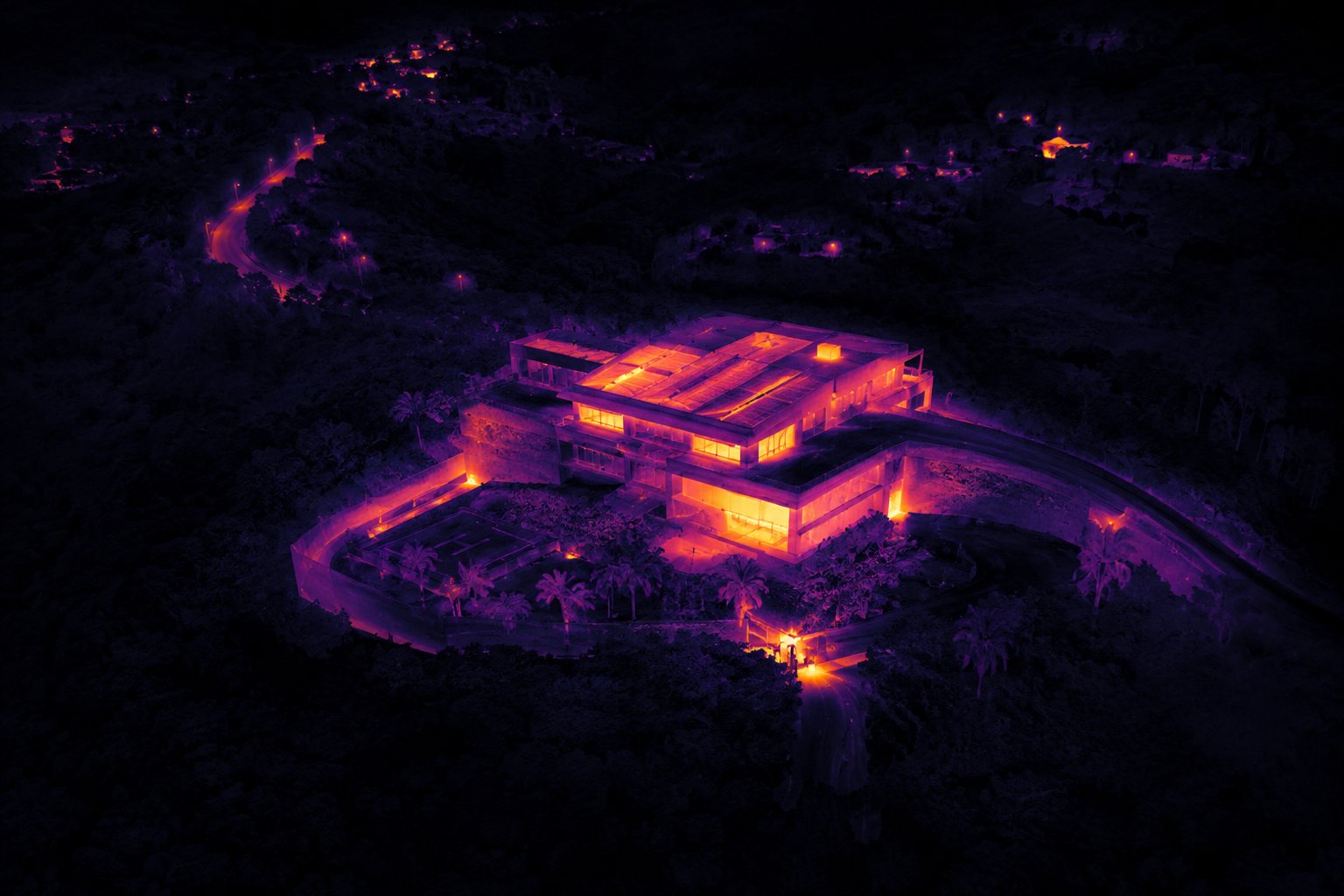
Thermal drone image of a modern flat-roofed building surveyed at dusk
How it works

How thermal imaging finds damp in a flat roof

It comes down to one simple fact: wet materials hold heat for longer than dry ones.

  1. The sun warms the roof during the day. Both the dry and the wet areas soak up heat.
  2. After sunset, the roof starts to cool. Dry insulation is a poor store of heat, so dry areas cool down quickly.
  3. Wet areas stay warm for longer. Water stores a lot of heat, like a hot water bottle, so the wet insulation gives it back slowly.
  4. The thermal camera sees the difference. In the evening, the wet patches glow as warmer shapes against the cooler dry roof, showing the size and shape of the water damage underneath.

This is why we fly flat roof surveys in the early evening, after a dry, sunny day.

When we survey

Planned around the weather.


  • A clear, dry day beforehand, so the roof has warmed up
  • No rain on the day, and no standing water or dew on the roof surface
  • Light winds, because wind cools the roof evenly and hides the differences
  • Flown shortly after sunset, when the contrast between wet and dry is strongest

If the conditions aren’t right, we’ll rearrange rather than give you an unreliable result.

What you get

Evidence, not guesswork.


  • A thermal and visual drone survey of the whole roof
  • A written report with annotated thermal images showing each suspected wet area, its approximate size and its location on a roof plan
  • An engineering assessment of the likely cause, such as failed seams, damaged outlets, poor upstands or punctures
  • Clear recommendations, including where to take moisture readings or core samples to confirm the findings before repair

Surveys from £195 inc. VAT, including a full written report. Free, fixed quotes.

Why use a drone?

Nobody walks on your roof.


  • No one walks on the roof. That’s safer, and avoids damaging a fragile or wet roof
  • The whole roof in one visit, even large commercial roofs
  • Targeted repairs. Fixing only the wet sections can cost a fraction of a full replacement
  • Evidence you can use for insurers, landlords, contractors or a planned maintenance budget
Which roofs can we survey?

Most insulated flat roofs.


Most insulated flat roofs, including felt, asphalt, EPDM rubber, single-ply membranes and GRP fibreglass. It’s suitable for homes, extensions, garages, schools, offices, industrial units and community buildings.

Roofs covered in gravel or ballast, or with shiny metallic coatings, are harder to survey accurately. We’ll tell you at the quote stage if your roof isn’t a good fit.

Flat roof FAQs

Good to know.


Yes. Thermal imaging shows where the insulation under the roof covering has become wet, which is usually the best clue to where the leak is and how far the water has spread.

Surveys start from £195 including VAT and the written report. The final price depends on the size of the roof, its location and access. We'll give you a free, fixed quote before any work is booked.

During the day, the sun heats the whole roof. After sunset, dry areas cool quickly, while wet areas hold their heat for longer. That temperature difference is what the thermal camera picks up, and it's strongest in the early evening.

Not straight away. Rain or standing water on the surface hides what's going on underneath. We wait for a dry, sunny day so the results are reliable.

No. The drone survey is completely non-invasive. We may recommend that your roofer takes a moisture reading or a small core sample to confirm a suspected wet area before repairs.

Often, yes. If the wet areas are limited, your roofer can repair just those sections. If the damage is widespread, the survey gives you the evidence to plan a replacement with confidence.

Reports are usually delivered within 24 to 48 hours of the survey.

Most insulated flat roofs, including felt, asphalt, EPDM rubber, single-ply and GRP fibreglass. Gravel-covered roofs and shiny metallic coatings are harder to survey, and we'll tell you at the quote stage if yours isn't suitable.

New to thermal imaging?

Our plain-English guide explains how a thermal camera sees damp, leaks and heat loss, and what it can and can't do.

Read the guide

Got a leaking or ageing flat roof?

Get a free quote for a flat roof thermal survey across Devon, Cornwall and the South West.

Get a Free Quote
Message us on WhatsApp