Thermal imaging, explained simply
Everything around you gives off heat, even things that feel cold. That heat travels as a type of light called infrared. Our eyes can’t see it, but a thermal camera can.
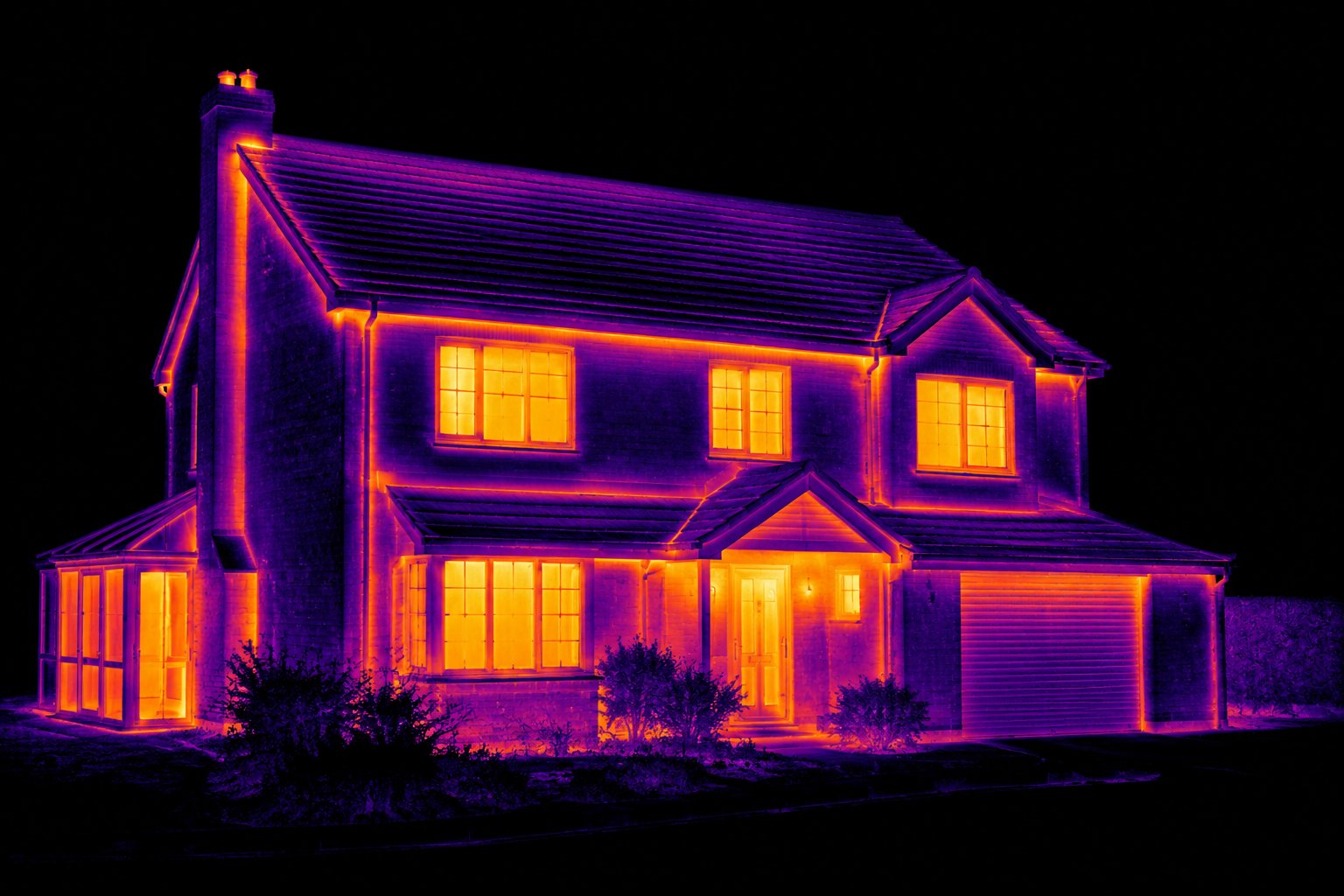
A thermal camera turns that invisible heat into a picture. Warmer areas show as bright colours, like yellow, orange and white. Cooler areas show as dark colours, like blue and purple. So instead of a photo of what something looks like, you get a picture of how warm each part of it is.
A simple way to picture it
Put your hand flat on a table for a few seconds, then lift it off. To your eyes the table looks the same. Through a thermal camera you’d see a glowing handprint, because your hand left warmth behind.
Buildings work the same way. Water, missing insulation and draughts all change the temperature of the surface they’re behind. The changes are often less than a degree or two, far too small to feel or see, but a thermal camera picks them up clearly.
Why it finds problems you can’t see
Damp and leaks
Water holds on to heat much longer than dry materials, like a hot water bottle. Wet areas warm up and cool down more slowly than the dry areas around them, so they stand out on camera. Where water is evaporating, it can also make a surface noticeably cooler. That is how we traced a hidden leak under solar panels in Kingskerswell, and how we map wet insulation in flat roofs.
Heat loss and missing insulation
On a cold day, heat escaping through a wall or roof shows up as a warm patch on the outside. Gaps in insulation, cold bridges and draughts become obvious. See thermal building surveys.
Electrical and solar faults
Faulty connections and damaged solar cells run hotter than they should, so they show up as hot spots long before they fail. See solar inspections.
What thermal imaging can’t do
It’s important to be honest about the limits:
- It can’t see through walls or roofs. It only measures the surface temperature, and reads what’s happening behind it from the pattern.
- It needs the right conditions. There has to be a temperature difference to see. Surveys are timed for the right weather and time of day, and wind, rain or direct sun can hide problems.
- Shiny surfaces mislead it. Glass, polished metal and foil reflect heat from elsewhere, like a mirror.
- A colour isn’t a diagnosis. A cool patch could be damp, a draught or a reflection. Telling them apart takes training and experience.
Why it matters who’s behind the camera
Anyone can buy a thermal camera. Reading the images correctly is the skill. David is an iRed-certified Level 1 Thermographer and a Class 1 Chief Engineer, trained in the heat transfer science behind every image. Every survey comes with a written report explaining what each anomaly is, what’s causing it and what to do about it.
Thermal imaging with a drone
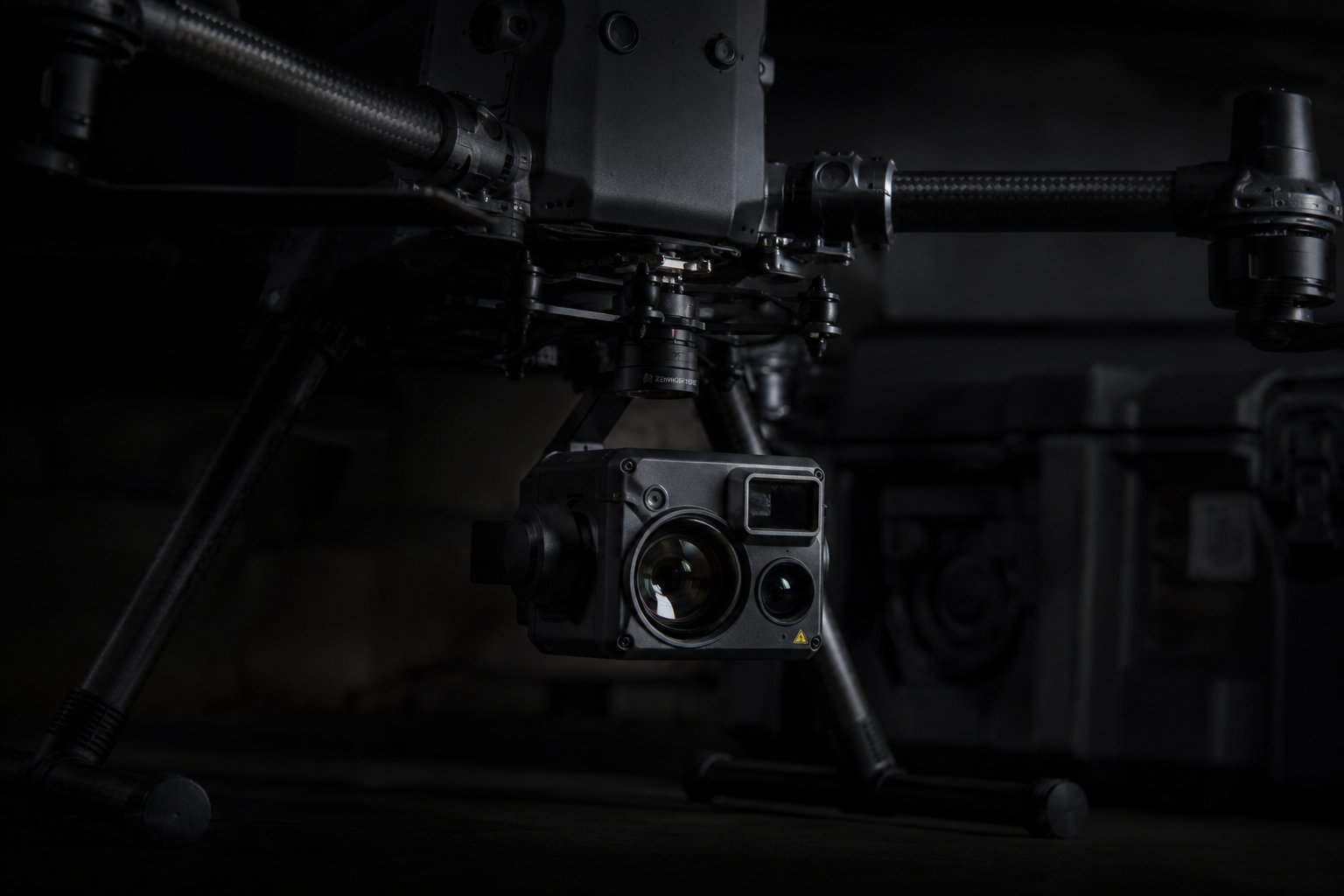
Putting the thermal camera on a drone lets us see roofs, high walls and whole solar farms from above, safely and quickly, with no scaffolding or ladders. We also use handheld thermal cameras inside buildings to trace leaks in lofts, ceilings and walls.
Want to see what your building is hiding? Get a free quote. Surveys from £195 inc. VAT, including a full written report.